Legal Liability and Invasive Knotweed in the United States – Part 1 of 3
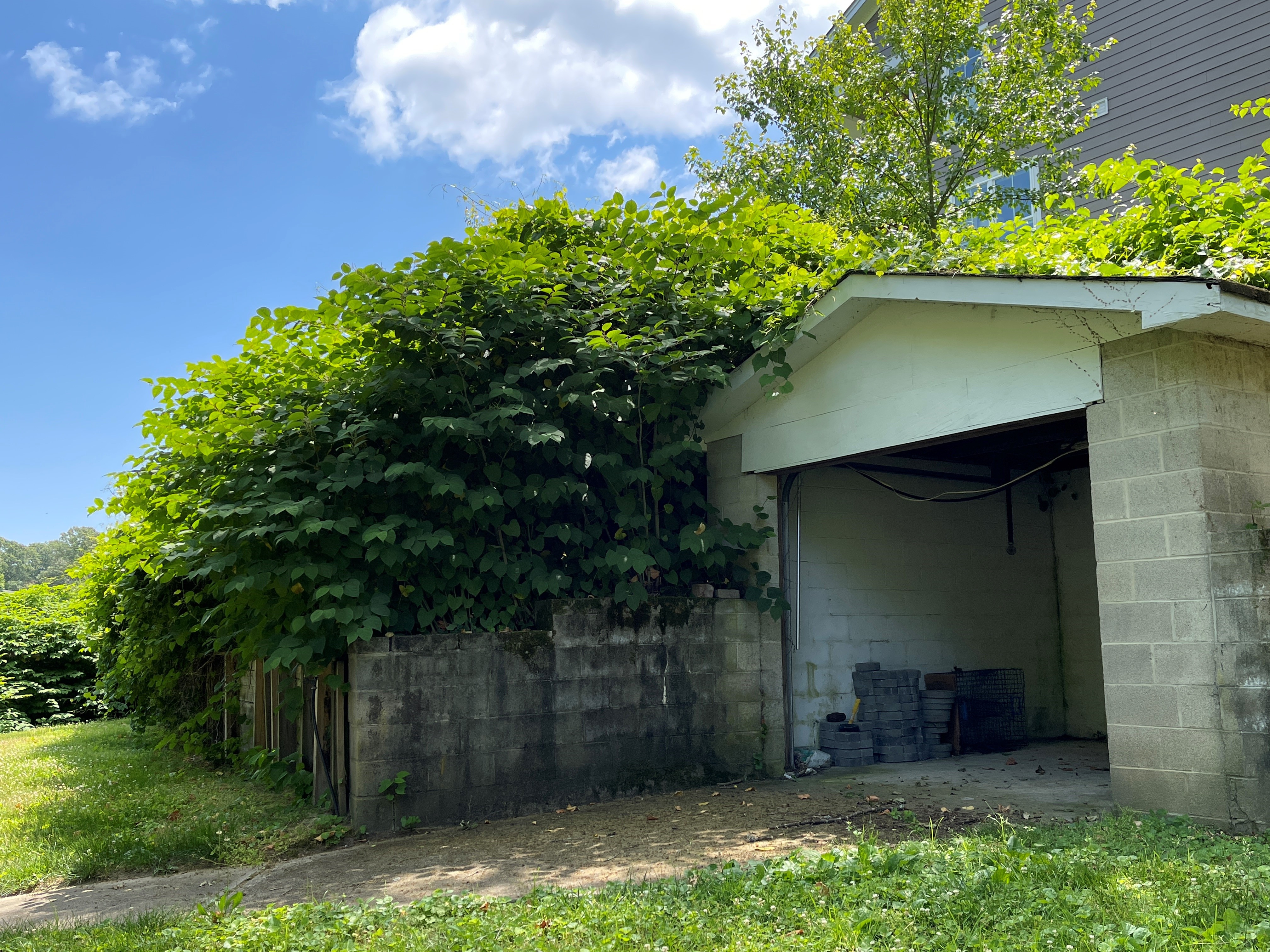
This is Part 1 of a three-part exploration of legal liability and invasive knotweed:
Part 1: Background.
Part 2: Real Estate Transactions and Liability for Invasive Knotweed Infestations.
Part 3: Nuisance and Tort Actions and Liability for Invasive Knotweed Infestations.
These posts should not be viewed as legal advice! If you need legal advice, consult a lawyer.
Background.
Although there have not been many legal cases involving Japanese knotweed in the U.S., the two that have gone to trial have been stunners: in a 2016 New York case, a jury awarded a homeowner more than half-a-million dollars due to the spread of an infestation of knotweed from a shopping center property. In a 2024 Massachusetts case, a jury awarded a home buyer $186,000 due to a knotweed infestation whose existence the developer did not disclose. When coupled with an award of attorneys’ fees, the total award in that case could also approach half-a-million dollars.
Are these cases outliers? Or, are they the initial rollers signaling waves of litigation yet to come?
If you are not familiar with invasive knotweed, an article in Slate by Henry Grabar provides a bracing introduction. Oh, No, Not Knotweed! (2019). In North America, there are four species of invasive knotweed, with the most well-known being, Japanese knotweed (Reynoutria japonica, synonyms Fallopia japonica and Polygonum cuspidatum). As Grabar makes clear, invasive knotweed’s effect on the environment, especially on waterways, is very serious. Its effect on property values is less clear, at least in the U.S.
To better understand this issue, it helps to look at the United Kingdom where the invasion of knotweed is more advanced.
Japanese Knotweed in the United Kingdom:
In the United Kingdom, invasive knotweed has been a major issue for years. “At the heart of the Great British Knotweed Panic” as Grabar succinctly puts it, “is the fear that knotweed will make your house fall down.” This fear has had a pronounced effect on property values. A 2020 article from Yahoo Finance stated that Japanese knotweed was knocking £ 23,530 off the average UK property value, i.e., 10%. That’s a massive effect. Think of that: a $50,000 discount on a house selling for $500,000 – all due to the presence of a weed on or near your property.
Why does invasive knotweed have this effect on property values in the UK? First, the knotweed problem is widespread in the UK. A British knotweed remediation company, Environet, estimates about 5% of homes in the UK either have invasive knotweed on their property or a neighboring property.
Second, under UK environmental laws, soil containing knotweed propagules (live rhizomes or shoots) is likely to be considered a “controlled waste.” This means it cannot go through normal waste disposal channels, and disposal consequently is far more expensive.
Third, the standard property conveyance form in the UK requires a seller to disclose whether the property is “affected by Japanese knotweed.” In contrast, the only federally mandated disclosure in the U.S. is lead paint.
Fourth, and perhaps most importantly, is the position taken by the Royal Institution of Chartered Surveyors (RICS) in 2012. In the UK, chartered surveyors conduct real property valuations. In 2012, RICS adopted a “7 metre rule” which stated that if invasive knotweed was found growing on a property or within seven meters of a property boundary, a mortgage would likely not be offered.
Recently, several things have occurred which likely will reduce the effect of invasive knotweed on the British real estate market. First, the Royal Institution of Chartered Surveyors (RICS) has changed its position. In 2022 RICS released a standard entitled “Japanese knotweed and residential property.” The new standard changes the “7 metre rule” to a “3 metre” rule. Moreover, with RICS’s new standard, even the most infested sites can get a mortgage if a Japanese Knotweed Management Plan is undertaken by remediation specialist and there’s an insurance backed guarantee for the knotweed control.
The primary rationale for the changes in the RICS position on knotweed is threefold. First, according to RICS, there is now reasonably strong evidence that knotweed is not unusually harmful to structures. The RICS standard cites Fennell et al (2018) for the proposition that “Japanese knotweed poses less of a risk of damage to substantial buildings than many trees or woody shrubs.”
Second, according to RICS, it has become clearer how to do knotweed control and how long it takes for control to be effective. The RICS report observes that Jones et al (2018) “confirmed that control of an infestation was readily achievable when properly undertaken for sufficient time (normally 3–5 years for stands smaller than 100 m2).”
Third, the RICS report speaks of the “’normalisation’ of knotweed as an environmental issue rather than only being a social/property issue.” More specifically, RICS mentions the “the impact in the market” “influenced by exaggerated media reporting” about invasive knotweed. This according to RICS resulted “in an adverse public perception out of all proportion to the actual problem.” RICS’s new standard is intended to usher in a recalibration to what it sees as a more realistic approach, one where knotweed is viewed as primarily a threat to the environment as opposed to structures.
How have the changes in the RICS position and the increase in scientific understanding of knotweed affected property valuations and litigation in the UK? It is still too early to tell. As recently November of 2023 one knotweed remediation company still spoke of a “surge of successful claims” in recent years related to invasive knotweed. PBA Solutions 2023. And, the Supreme Court of the United Kingdom recently handed down a decision from an appeal of a private nuisance action brought by homeowners concerning a knotweed infestation. Although the Supreme Court found for the defendant, a county borough with knotweed infested property, the case certainly does not foreclose future nuisance actions. Davies v. Brigend County Borough Council, [2024] UKSC 15. None of these developments indicate a pronounced cooling in knotweed litigation in the UK.
What might happen in the U.S.?
Will invasive knotweed result in more lawsuits in the U.S. as in the UK? In my research I have not seen any reports of invasive knotweed having an effect on home prices anywhere in the U.S. In addition, there are not many reported cases in the U.S. concerning knotweed. The two mentioned above are the only two that I could find.
These two cases nicely highlight the likely areas of potential liability, namely, real estate transactions and nuisance and tort actions. Part 2 of this series deals with Real Estate Transactions and Liability for Invasive Knotweed Infestations. Part 3 deals with nuisance and tort actions and liability for knotweed infestations.
 Green Shoots News